
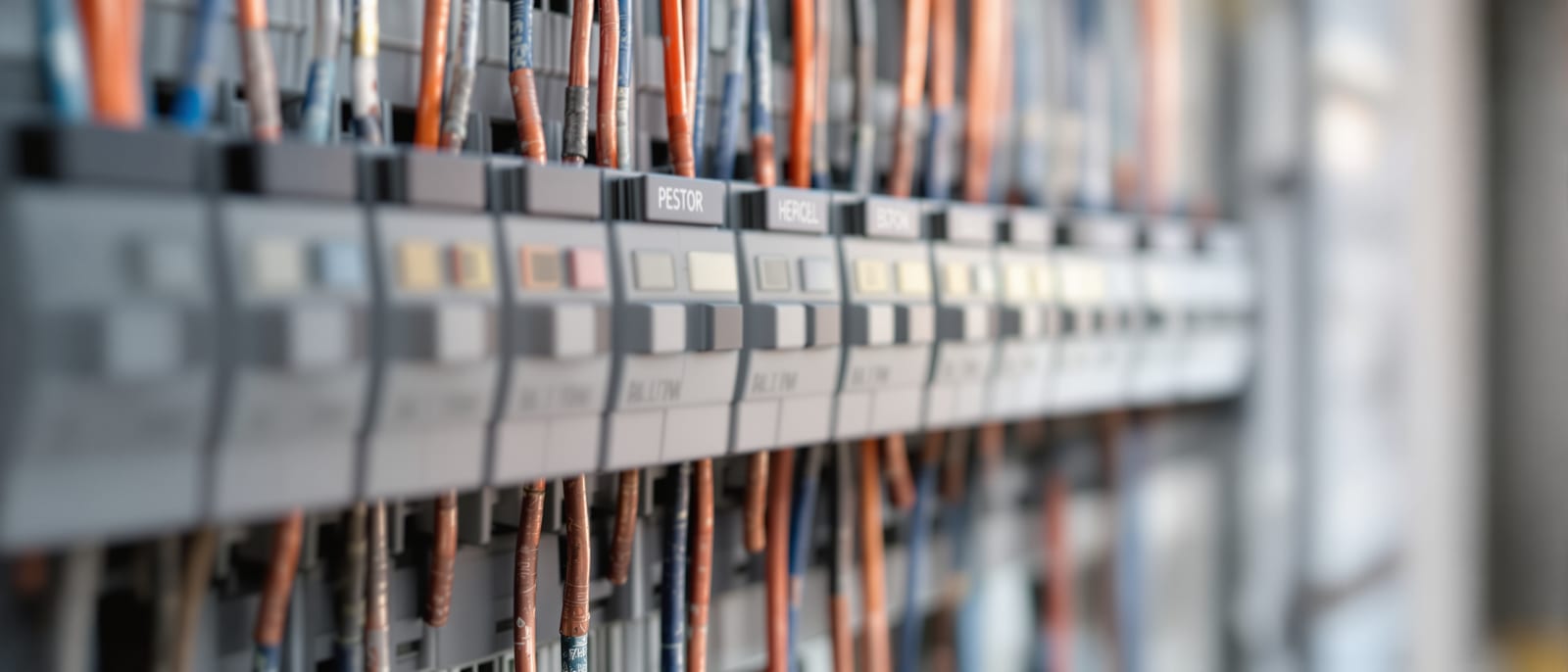
Undersized Panels and Melted Conductors
The mechanism is the same wherever it happens. A termination runs hot under load, the heat degrades the connection, the degraded connection runs hotter still, and eventually the insulation melts and the conductor discolours. It is a progressive failure over years, not a sudden one. What differs is where you find it and what it costs to be wrong about it.
- Exterior mains and meter stacks — melted or discoloured insulation at main lugs and feeder terminations, equipment sized for the building's original load, corrosion and water intrusion in enclosures never properly sealed, double-lugged feeders left by earlier repairs
- Interior unit panels — 60A and 100A panels carrying loads nobody planned for, overheating at breaker stabs and neutral bars, no space left to add a circuit, and the point where aluminum branch wiring terminates
- Both — breakers that no longer coordinate with the conductors they protect, and obsolete equipment with no replacement parts still available
The fix depends on what the assessment finds, and the honest answer is often smaller than owners expect. Sometimes it is termination work and a torque specification correctly applied. Sometimes it is a genuine service upgrade with new gear. Sometimes the mains are fine and the problem is entirely in the unit panels, or the reverse. We tell owners which one it is before quoting, because those are very different numbers and pretending otherwise helps nobody.
Aluminum Wiring in Multifamily Buildings
Aluminum comes up twice in these buildings and the two cases are not the same thing. Aluminum branch-circuit wiring — the small conductors feeding receptacles and switches inside units — was in general use roughly between 1965 and 1973, and a great deal of DFW apartment stock dates from exactly that window. That wiring is the known hazard, and it is remediated at the terminations with approved connectors rather than by rewiring an occupied building.
- Unit-by-unit branch wiring remediation at receptacles, switches and splices
- Approved connectors rated for the conductor actually in the box
- Feeder termination inspection, preparation and torque to specification
- Documentation per unit for your files and your insurer
Aluminum feeder conductors in the service equipment are a different matter entirely. Large aluminum conductors remain permitted, are still installed in new work today, and are not a defect. They fail when the terminations are loose, unprepared or over-torqued. So finding aluminum in a main panel is not by itself bad news — finding it improperly terminated is. An electrician who tells a property manager that all aluminum must be replaced is either not distinguishing between the two or is selling something.
Working Around Occupied Units
Multifamily work is a scheduling problem as much as an electrical one. People live in the building, and every hour of planned outage has to be noticed, communicated and kept to. We plan main panel work in phases so the number of units affected at any one time stays small and predictable, coordinate the utility disconnect and meter release in advance rather than on the day, and do unit interior work on turn cycles wherever the timeline allows.
- Phased scopes that limit how many units are affected at once
- Utility disconnect and meter release coordinated ahead of the work
- Advance written notice you can hand straight to residents
- Unit interiors scheduled against turn cycles where possible
- After-hours and weekend work available — we run 7:00 AM to 7:00 PM, seven days
Who We Work With
Apartment owners, property management companies, HOAs and commercial landlords across Dallas-Fort Worth. Some of that is a single building with one failing main panel. Some of it is a portfolio where the same 1970s equipment shows up at every property and the work gets planned over several budget cycles. Both are normal, and the second is easier when someone has actually seen inside all of them.