Aluminum wiring repair in Dallas-Fort Worth costs $45–$85 per outlet or switch for AlumiConn pigtail connections and $60–$110 per connection for UL-listed COPALUM crimps, while replacing aluminum branch circuits with copper runs $6.50–$12.40 per square foot as part of a full rewire.
2026 repair prices: AlumiConn vs COPALUM vs full copper rewire
There are three accepted ways to deal with aluminum branch-circuit wiring, and they sit at three very different price points. The right one depends on your budget, your insurer's requirements, and whether you plan to stay in the home long-term.
| Method | Per-connection cost | Whole-home typical | Insurer acceptance |
|---|---|---|---|
| AlumiConn pigtails | $45 – $85 per outlet/switch | $3,000 – $7,500 | Accepted by most, with documentation |
| COPALUM crimps (UL-listed) | $60 – $110 per connection | $4,500 – $12,000 | Universally accepted |
| Full copper rewire | $6.50 – $12.40 / sq ft | $9,750 – $31,000 | Fully accepted — removes aluminum |
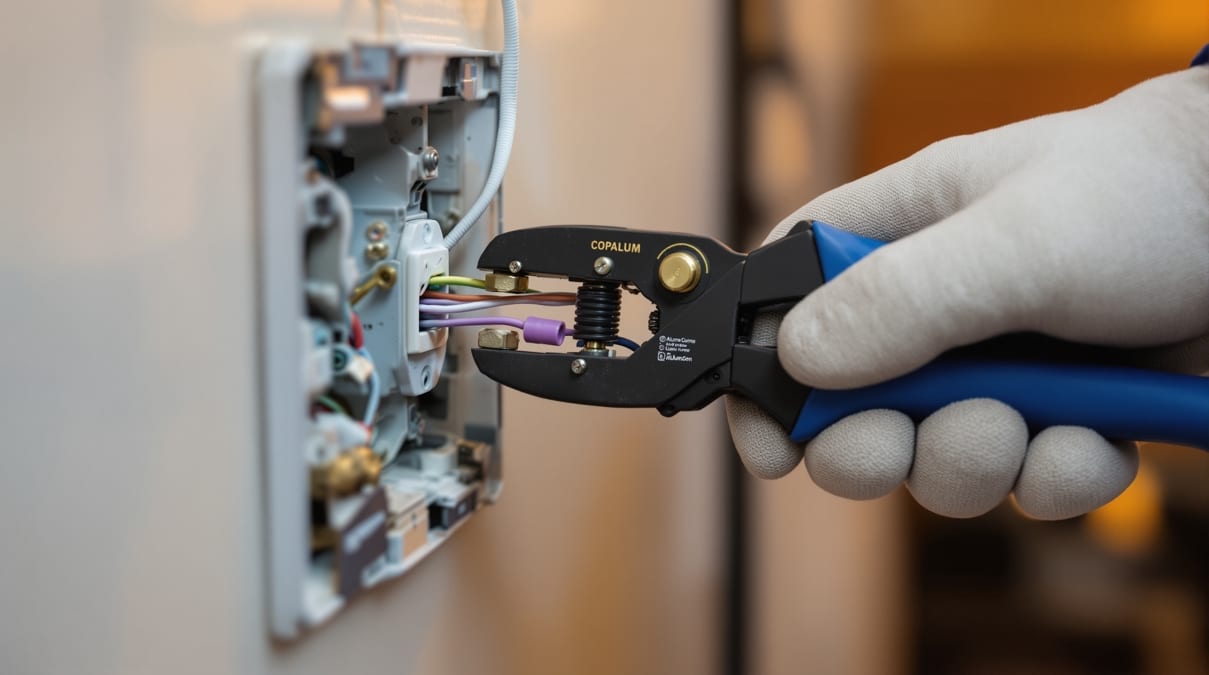
The per-connection number is what a single outlet or switch costs to remediate; the whole-home figure is the total for a typical DFW home with 60 to 120 aluminum connections across its outlets, switches, and light fixtures. AlumiConn is the budget-friendly repair — a mechanical lug connector that joins the aluminum wire to a short copper pigtail using a set screw. COPALUM is the premium crimp method — a UL-listed cold-weld crimp that fuses the aluminum and copper under pressure and is the only repair method the U.S. Consumer Product Safety Commission has formally endorsed. A full rewire removes the aluminum entirely and replaces every branch circuit with copper.
Most homeowners we talk to in Arlington, Grand Prairie, Richardson, and Garland do not need a full rewire. If the aluminum wiring is otherwise intact and the connections are the problem — and they almost always are — a whole-home pigtail or crimp job resolves the fire risk for a fraction of the cost of pulling new copper. The rewire only makes sense if you are already gutting walls, the wiring is badly degraded, or your insurer will not accept a repair.
How to tell if your home has aluminum wiring
Aluminum branch wiring was installed in the United States from roughly 1965 through 1973, which means a huge swath of DFW's mid-century housing stock has it. Here is how to check:
- Build year — homes built 1965–1973 are the prime candidates. If your home falls in that window, assume aluminum until proven otherwise.
- Cable jacket stamping — open a light switch or outlet cover and look at the cable. Aluminum cable is stamped 'AL', 'ALUM', or 'ALUMINUM' on the outer jacket. Copper is stamped 'CU' or 'COPPER'.
- The wire color — where the insulation is stripped, aluminum is bright silver-white; copper is reddish-orange. Aluminum is also noticeably lighter and softer than copper.
- Warm switch plates or outlets — aluminum expands and contracts with heat, so connections loosen over time. A switch plate or outlet that feels warm to the touch is a classic warning sign of a failing aluminum connection.
- Flickering or intermittent power — if a light flickers when you bump the wall, or an outlet only works sometimes, the connection is loose. With aluminum, that is not an annoyance — it is a fire waiting for a load.
What insurance companies require in Texas
This is the trigger that brings most DFW homeowners to us: the insurer's non-renewal letter. Many Texas carriers now refuse to write or renew policies on homes with unmitigated aluminum branch wiring, because aluminum accounts for a disproportionate share of residential electrical fires. The searcher here usually has a deadline, not a curiosity.
Insurers do not all ask for the same thing, but the ask generally falls into one of three tiers:
- Repair and document — most insurers will accept AlumiConn pigtails or COPALUM crimps if the work is done by a licensed electrician and documented in writing. They want a signed statement that every aluminum connection in the home was remediated to an approved method.
- Require COPALUM specifically — a handful of carriers are stricter and will only accept the UL-listed COPALUM crimp, not the AlumiConn lug. This is exactly why we name both methods up front and quote the difference.
- Require full replacement — rarely, an insurer will not accept any repair and wants the aluminum circuits replaced with copper. That is the $9,750–$31,000 path, and it is when you should compare the cost against simply switching carriers.
We provide every homeowner with a remediation certificate listing the method used, the number of connections completed, and the licensed electrician who performed the work. That is the documentation your agent forwards to underwriting to get the policy renewed or the premium restored. If you want the full-replacement path instead, here is what a complete rewire actually costs.
Get your aluminum wiring assessed and quoted.
Written flat-rate price, insurer documentation included.
Aluminum wiring repair FAQs
$3,000–$7,500 for a typical DFW home, or $45–$85 per outlet or switch for AlumiConn pigtails. COPALUM crimps run $60–$110 per connection and $4,500–$12,000 whole-home. The total depends on how many outlets, switches, and light fixtures your home has.
Many will, but usually only after the aluminum is remediated and documented. Unmitigated aluminum branch wiring is a frequent cause of non-renewal and higher premiums in Texas. Once you repair the connections with an approved method and provide a remediation certificate, most carriers will write or renew the policy. A few require the COPALUM crimp specifically, and a small number demand full copper replacement.
Both are UL-listed, code-compliant repair methods and both eliminate the primary failure mode — the loose, overheated connection. COPALUM is the more heavily endorsed option (it is the only repair the CPSC formally recommends) and is a permanent cold-weld crimp. AlumiConn is a proven mechanical lug connector that costs less and performs well when torqued correctly with an anti-oxidant compound. The right choice depends on your insurer's requirements and your budget.
In most homes you can repair it. Aluminum wire itself is not the problem — the connections are, because aluminum oxidizes and loosens at terminations. Pigtailing every connection with AlumiConn or COPALUM resolves the risk without pulling new wire. Full copper replacement is only necessary when the wiring is degraded, you are renovating anyway, or your insurer will not accept a repair.
Significantly. Aluminum wiring accounts for a disproportionate share of residential electrical fires because loose, oxidized connections overheat and arc inside the wall. The danger grows with every year the connections go unchecked and with every new high-draw appliance added to the circuit. If you have aluminum wiring, a warm outlet, or a flickering light, treat it as urgent — this is not a cosmetic issue.